Published August 13, 2026
The Hidden Cost of a Great View: What Triad Homebuyers Should Know About Homes Near Creeks, Lakes, and Greenways

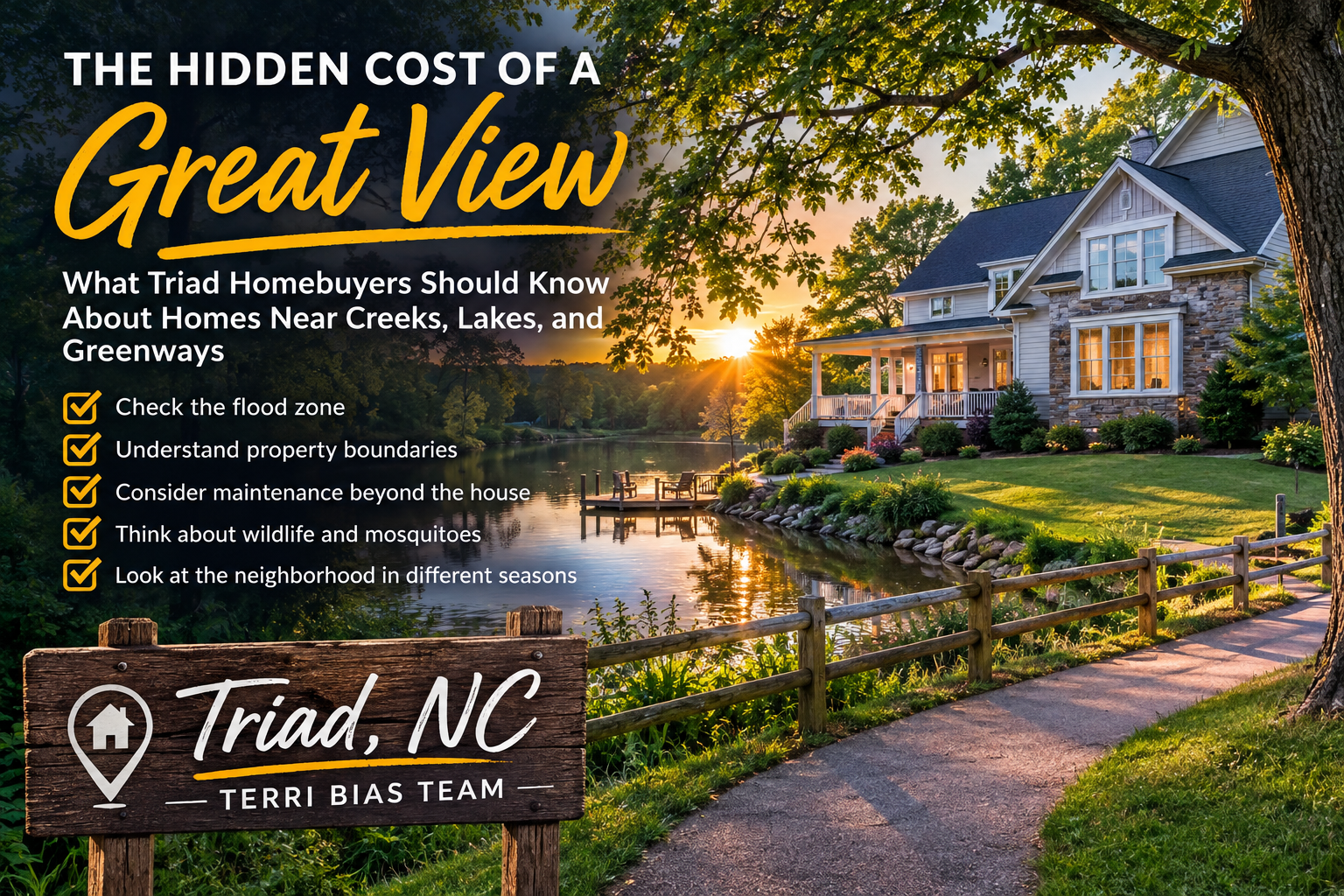
A beautiful view can make a home feel special. Whether it’s a backyard overlooking a creek, a property beside a lake, or a home backing up to one of the Triad’s many greenways, natural surroundings can be a major selling point.
But there’s more to buying a home with a great view than simply appreciating the scenery.
For Triad homebuyers, properties near water, wooded areas, and greenways can come with unique considerations that aren’t always obvious during a casual showing. Understanding these factors before making an offer can help buyers avoid unexpected expenses and make a more informed decision.
Why Location Near Nature Can Be So Appealing
Homes near natural spaces often offer something that is difficult to replicate: a sense of privacy and tranquility.
Instead of looking out the window at another house, homeowners may see mature trees, walking trails, a creek, or an open natural area. These features can also provide easy access to outdoor recreation, which is particularly attractive to buyers who enjoy walking, running, cycling, fishing, or simply spending time outside.
In the Triad, communities throughout the Winston-Salem, Greensboro, High Point, Kernersville, Clemmons, and surrounding areas offer homes with access to a variety of parks, trails, waterways, and wooded spaces.
But the same features that make these properties attractive can also require additional due diligence.
1. Check the Flood Zone
One of the first things buyers should investigate when considering a home near a creek, river, or other body of water is its flood risk.
A property does not necessarily need to be directly beside a river to have flood-related concerns. Drainage patterns, elevation, nearby waterways, and changing development in the surrounding area can all affect how water moves through a property.
Buyers should review available flood maps and discuss potential flood insurance requirements with their insurance provider before purchasing.
Even if flood insurance isn't required by a lender, buyers may still want to consider whether the additional coverage makes sense for the property.
2. Don't Assume the View Will Always Stay the Same
One of the biggest advantages of backing up to a wooded area or natural property is privacy.
However, buyers should find out exactly what is behind the property.
Is it privately owned land? A public park? A conservation area? A utility easement? Undeveloped land that could potentially be developed in the future?
A beautiful wooded view can be a major selling feature, but it's important to understand whether there are restrictions that would prevent future construction.
This is one reason researching neighboring parcels can be just as important as researching the home itself.
3. Understand Property Boundaries
Natural features don't always make good property boundaries.
A creek may appear to separate two properties, but the actual legal property line could be somewhere else. Similarly, a fence at the edge of a backyard doesn't necessarily indicate the precise boundary.
For properties with unusual terrain, waterfront access, or large wooded areas, buyers should pay close attention to the survey and other property records.
Knowing exactly what you're purchasing can prevent unpleasant surprises later.
4. Consider Maintenance Beyond the House
A home surrounded by trees can be beautiful—but trees also require maintenance.
Large trees can drop branches during storms, leaves can accumulate in gutters, and heavily wooded properties may require regular trimming and cleanup.
Properties near creeks or low-lying areas can also have drainage and erosion concerns.
Before purchasing, buyers should look beyond the condition of the house itself and consider what maintaining the surrounding property may involve.
A professional home inspection can help identify potential concerns that aren't immediately visible.
5. Think About Mosquitoes and Other Wildlife
Living closer to nature means sharing the environment with nature.
Depending on the property, homeowners may encounter deer, squirrels, raccoons, snakes, insects, and other wildlife. Areas near standing or slow-moving water can also experience higher mosquito activity during warmer months.
None of these things necessarily make a property a bad purchase. However, buyers should consider whether the lifestyle matches their expectations.
If possible, visit the property at different times of day and during different seasons before making a final decision.
6. Look at the Neighborhood During Different Seasons
A property that looks perfect in the spring may feel completely different in the middle of summer or after the leaves fall.
Seasonal changes can affect:
- How much privacy the trees provide
- How much sunlight reaches the backyard
- Drainage and standing water
- Visibility of neighboring properties
- Road conditions
- Landscaping and maintenance requirements
If you're seriously considering a property, ask your real estate agent what the area is typically like throughout the year.
The View Can Be Worth It—When You Know What You're Buying
There is nothing wrong with prioritizing a beautiful view or a peaceful natural setting when searching for a home.
In fact, these features can be some of the things that make a property truly memorable.
The key is to look beyond the view.
Before purchasing a home near a creek, lake, greenway, or heavily wooded area, investigate flood risk, property boundaries, neighboring land, insurance considerations, maintenance requirements, and potential changes to the surrounding area.
A little extra research can help you enjoy the scenery without discovering unexpected issues after closing.
Looking for a Home in the Triad?
Finding the right home isn't just about the number of bedrooms or the size of the kitchen. It's also about understanding the land, neighborhood, surroundings, and long-term considerations that come with the property.
If you're searching for a home in the Triad and want help evaluating more than just what's inside the front door, the Terri Bias Team can help you navigate the process and ask the questions that matter before you make an offer.