Published June 1, 2026
The Hidden Value of a Home Maintenance Calendar for Homeowners

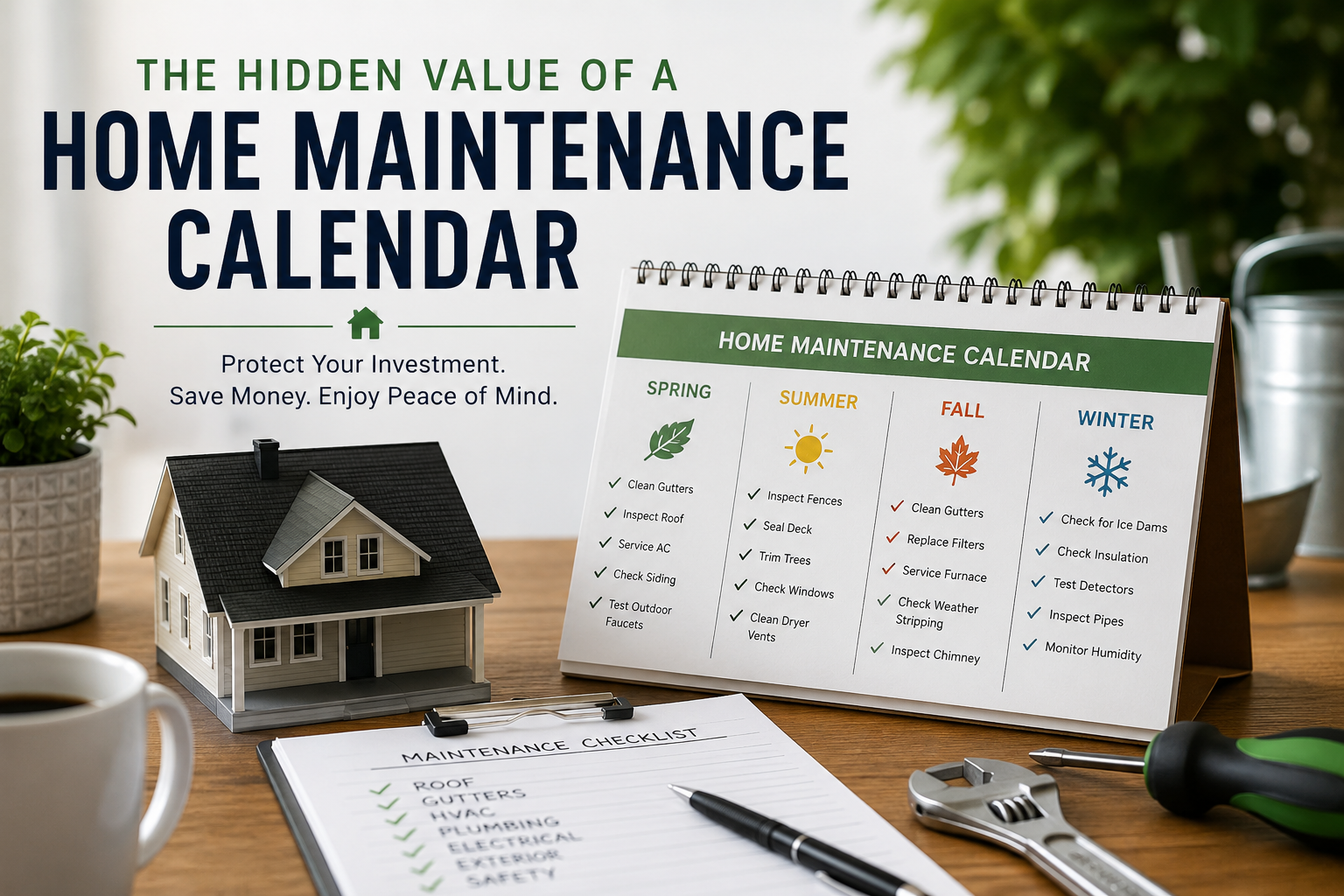
Why a Simple Schedule Can Protect Your Investment and Save You Thousands
Owning a home is one of the biggest investments most people will ever make. While many homeowners focus on mortgage payments, property values, and renovations, one often-overlooked tool can have a major impact on a home's long-term value: a home maintenance calendar.
A maintenance calendar isn't complicated. It's simply a schedule that helps homeowners stay ahead of routine tasks before small issues become expensive repairs. Whether you're planning to stay in your home for decades or thinking about selling in the next few years, proactive maintenance can protect both your comfort and your equity.
Why Preventative Maintenance Matters
Many costly home repairs start as minor problems. A clogged gutter can lead to water damage. An HVAC system that isn't serviced regularly may fail during the hottest week of summer. Small roof issues can turn into major leaks if left unchecked.
Routine maintenance helps homeowners:
- Extend the lifespan of major systems and appliances
- Reduce unexpected repair costs
- Improve energy efficiency
- Maintain curb appeal
- Preserve property value
- Create a smoother selling process in the future
Think of home maintenance as routine healthcare for your property. Regular checkups help prevent bigger problems down the road.
Seasonal Maintenance Checklist
Breaking tasks into seasons makes maintenance easier to manage.
Spring
After winter weather, spring is the perfect time to inspect your home.
Tasks to consider:
- Clean gutters and downspouts
- Check the roof for missing or damaged shingles
- Inspect exterior siding and paint
- Service the air conditioning system
- Test outdoor faucets and irrigation systems
- Power wash decks, patios, and walkways
Summer
Warmer weather provides opportunities for outdoor projects.
Focus on:
- Inspecting fences and gates
- Sealing decks and wooden surfaces
- Trimming trees and shrubs away from the home
- Checking windows and doors for air leaks
- Cleaning dryer vents
Fall
Preparing for colder temperatures can prevent winter headaches.
Recommended tasks:
- Clean gutters again after leaves fall
- Replace HVAC filters
- Schedule furnace maintenance
- Check weather stripping around doors and windows
- Drain and store garden hoses
- Inspect the chimney if applicable
Winter
Winter maintenance is often about monitoring and prevention.
Key tasks include:
- Checking for ice dams and roof issues
- Monitoring indoor humidity levels
- Testing smoke and carbon monoxide detectors
- Inspecting exposed pipes for freezing risks
- Reviewing attic insulation
The Financial Benefits of Staying Ahead
Many homeowners are surprised by how much money preventative maintenance can save.
For example:
- Regular HVAC servicing can improve efficiency and reduce energy costs.
- Early roof repairs may cost a few hundred dollars compared to thousands for water damage restoration.
- Sealing air leaks can lower heating and cooling expenses throughout the year.
Small investments in maintenance often deliver significant long-term returns.
Maintenance Records Can Help When Selling
If you decide to sell your home, organized maintenance records can be a valuable asset.
Potential buyers appreciate seeing evidence that a property has been cared for consistently. Service receipts, repair documentation, and maintenance logs can help build confidence and reduce concerns during inspections.
Well-maintained homes often present better, receive stronger offers, and encounter fewer surprises during the transaction process.
Creating Your Own Home Maintenance Calendar
Getting started is easier than many homeowners think.
You can:
- Use a digital calendar with recurring reminders
- Create a spreadsheet checklist
- Download a home maintenance app
- Keep a simple binder for service records and schedules
The goal isn't perfection—it's consistency.
Final Thoughts
A home maintenance calendar may not be as exciting as a kitchen renovation or a backyard makeover, but it can be one of the smartest tools a homeowner uses. By staying organized and addressing small issues before they grow, homeowners can protect their investment, avoid costly surprises, and enjoy greater peace of mind.
Your home works hard for you every day. A little preventative care can help ensure it continues to do so for years to come.