Published September 9, 2026
What Does a Home Inspection Actually Look For? A Buyer’s Guide for Triad Homebuyers

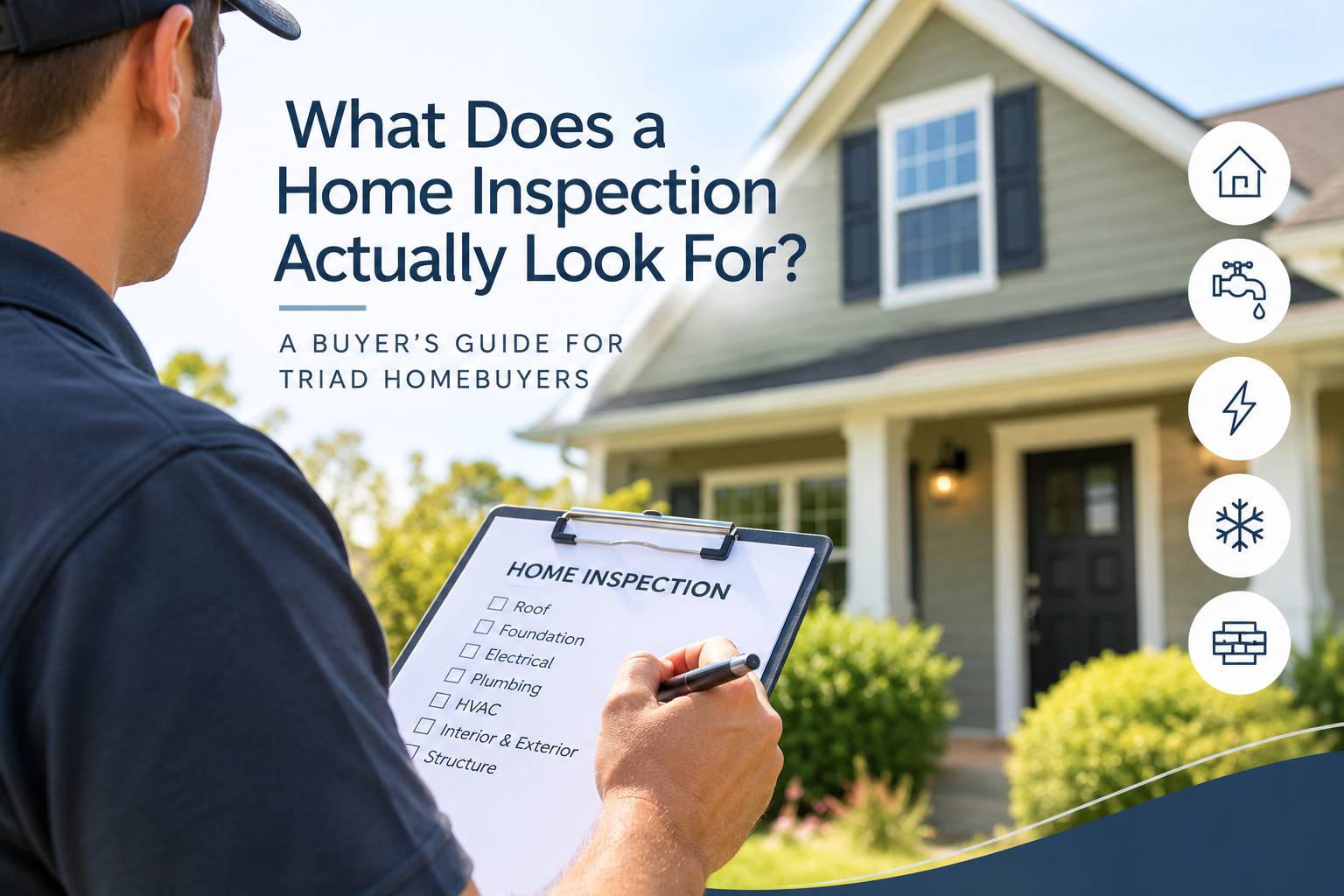
Buying a home is one of the biggest purchases you’ll make, and a home inspection is an important step in understanding what you’re really buying. While a beautiful kitchen or spacious backyard may catch your attention, an inspection looks beneath the surface to identify potential problems that may not be obvious during a showing.
For buyers in the Triad, including Winston-Salem, Greensboro, Kernersville, Clemmons, and surrounding communities, understanding what happens during an inspection can make the home-buying process feel much less intimidating.
What Is a Home Inspection?
A home inspection is a visual examination of the home’s major systems and components. A qualified home inspector evaluates the property and documents visible issues, safety concerns, maintenance needs, and areas that may require further evaluation.
The goal isn't to determine whether a home is perfect—no home is. Instead, an inspection helps buyers better understand the property's current condition so they can make informed decisions.
What Does an Inspector Look At?
1. Roof and Attic
The inspector will typically examine the roof covering, visible flashing, gutters, downspouts, and other accessible components. They may also look at the attic for signs of moisture, ventilation problems, or other concerns.
A roof that appears fine from the ground can sometimes have issues that aren't immediately noticeable.
2. Foundation and Structure
Structural components are another important part of the inspection. The inspector may look for visible signs of movement, cracking, moisture intrusion, or other conditions that could indicate a potential structural concern.
Not every crack means there is a major problem, but documenting these conditions can help determine whether additional evaluation is appropriate.
3. Plumbing
Inspectors generally check accessible plumbing fixtures and look for visible leaks, water pressure concerns, drainage problems, and other conditions.
They may also examine accessible pipes and water heaters to identify potential maintenance or safety issues.
4. Electrical System
Electrical inspections can reveal issues such as improperly installed wiring, missing covers, outdated components, or other visible safety concerns.
Because electrical problems can create significant safety risks, buyers should take reported issues seriously and consult a qualified professional when further evaluation is recommended.
5. Heating and Cooling Systems
The inspector will typically evaluate the accessible components of the home's heating and cooling systems and report on their apparent condition.
In the Triad, where homeowners rely on both heating and air conditioning throughout the year, understanding the condition of the HVAC system can be especially valuable when budgeting for future maintenance or replacement.
6. Windows, Doors, and Interior
Inside the home, inspectors may check doors, windows, stairs, railings, ceilings, walls, floors, and other accessible areas.
They are looking for visible signs of damage, safety concerns, moisture intrusion, or components that aren't functioning as intended.
7. Exterior Areas
The exterior inspection may include siding, trim, decks, porches, walkways, drainage, grading, and other accessible areas.
Water management around a property is particularly important because poor drainage can contribute to moisture and foundation-related problems over time.
Does a Home Inspection Mean You Shouldn't Buy the House?
Not necessarily.
It's important to remember that an inspection report can contain a long list of observations, even for a well-maintained home. The presence of issues doesn't automatically mean the property is a bad investment.
Instead, buyers should focus on understanding:
- Which issues are safety concerns?
- Which repairs are urgent?
- Which items are routine maintenance?
- Are there expensive repairs that may be needed soon?
- Does anything require evaluation by a specialist?
Your real estate agent can help you understand the transaction and communicate with the seller, while qualified contractors or specialists can provide additional opinions when needed.
Why Is a Home Inspection Worth It?
A home inspection can give buyers information they wouldn't necessarily discover during a typical showing.
It can help you:
Plan ahead: Knowing about aging systems or maintenance needs can help you prepare financially.
Prioritize repairs: Not every issue requires immediate attention. An inspection can help identify areas that deserve closer consideration.
Make informed decisions: The more you understand about a property, the better positioned you are to make decisions based on facts rather than appearances.
Avoid surprises: While an inspection cannot predict every future problem, it can uncover visible conditions that might otherwise go unnoticed.
What Should Buyers Do After the Inspection?
Don't panic when you receive the report. Instead, review it carefully and discuss the findings with your real estate professional.
If the inspector recommends that a particular issue be evaluated by a specialist, consider getting that additional opinion. Depending on the situation and the terms of your purchase agreement, your agent can also help you understand your options regarding repairs or negotiations.
The inspection is not about finding a "perfect" house. It's about gaining a clearer picture of the home before moving forward.
Buying a Home in the Triad?
Whether you're looking for your first home in Winston-Salem, moving to Kernersville, exploring Clemmons, or considering another Triad community, knowing what to expect during the inspection process can help you approach your purchase with greater confidence.
A home inspection is one piece of the larger home-buying process, but it can be an incredibly valuable one.
Thinking about buying a home in the Triad? The Terri Bias Team is here to help you navigate the process from finding the right property to understanding the steps involved in getting to the closing table.