Published September 20, 2026
What to Know Before Buying an Older Home in Winston-Salem, NC

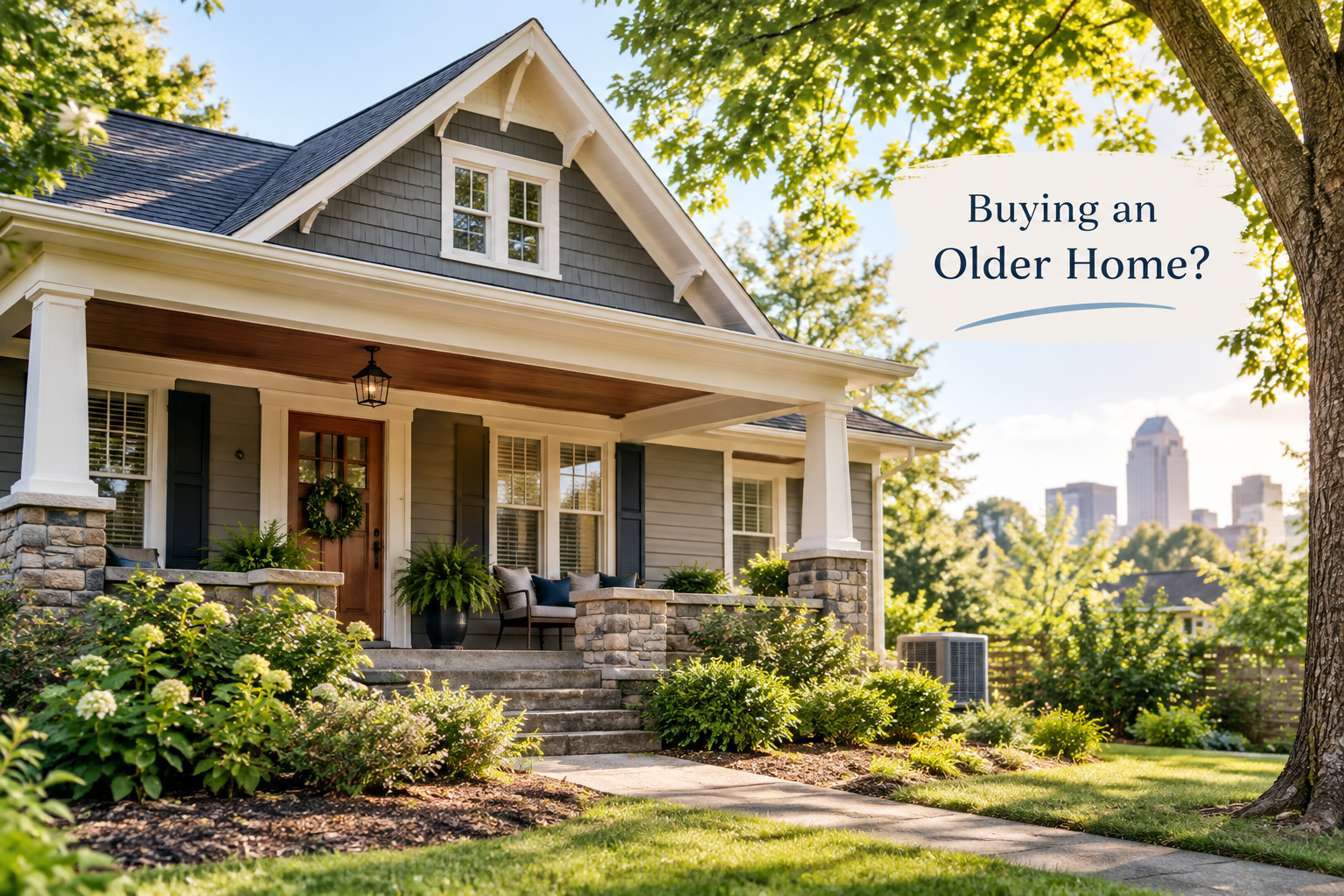
There’s something special about an older home. Maybe it’s the original hardwood floors, mature trees in the yard, a charming front porch, or an architectural style you simply don’t see in newer construction.
For many homebuyers, an older home in Winston-Salem can offer character and a great location. But buying an older property also means looking beyond the paint colors and beautiful details.
Before making an offer, it’s important to understand what you’re actually buying — including the home’s major systems, previous renovations, potential maintenance needs, and any issues that may not be visible during a typical showing.
Here are some important things Winston-Salem homebuyers should consider.
1. Start With the Age of the Home
The year a home was built can tell you a lot about what to investigate.
Older homes may have gone through several rounds of renovations and repairs. Some systems may have been replaced recently, while others could be approaching the end of their useful life.
Before buying, ask questions such as:
-
How old is the roof?
-
When was the HVAC system replaced?
-
Has the electrical system been updated?
-
What type of plumbing is in the home?
-
Has the foundation or crawl space been inspected?
-
Were additions or renovations completed?
-
Are there records showing when major improvements were made?
You don't necessarily need every component to be new. The goal is to understand the home's current condition so you can plan realistically.
2. Don't Skip the Home Inspection
A home can look beautiful while still having issues that aren't obvious during a showing.
The North Carolina Real Estate Commission recommends that buyers pay close attention to a home inspector's recommendations for additional or specialized inspections. In North Carolina, individuals performing home inspections for compensation must be licensed.
For an older home, your inspection may lead to recommendations for additional professionals, such as:
-
A structural engineer
-
Electrician
-
Plumber
-
HVAC professional
-
Roofing contractor
-
Chimney specialist
-
Pest or wood-destroying insect inspector
Think of the inspection as a way to learn more about the property — not simply as a pass-or-fail test.
3. Pay Special Attention to the Electrical System
Electrical systems can change significantly over the life of an older home.
A previous owner may have upgraded portions of the system without completely modernizing it. During your inspection, ask whether the electrical panel, wiring, outlets, grounding, and other components appear appropriate for the home's current use.
This is particularly important if you're planning to add modern appliances, an EV charger, a home office, or other high-demand electrical equipment.
If your inspector identifies a concern, consider having a qualified electrician evaluate it before you finalize your plans.
4. Check the Plumbing and Water Lines
Plumbing is another area where age matters.
Older homes can contain plumbing materials that differ from what is commonly used in newer construction. Previous renovations may also mean that different types of pipes are present in different sections of the house.
Ask your inspector about:
-
Supply pipes
-
Drain lines
-
Water pressure
-
Visible leaks
-
Corrosion
-
Sewer lines
-
The age and condition of the water heater
A sewer-line inspection can also be worth considering, particularly when purchasing an older property. A problem underground may not be visible during a normal home inspection.
5. Don't Forget the Crawl Space and Foundation
In Winston-Salem's older neighborhoods, you may encounter homes with crawl spaces, basements, or other foundation configurations that require careful attention.
Look for signs of:
-
Moisture
-
Standing water
-
Excessive humidity
-
Wood damage
-
Foundation movement
-
Poor drainage
-
Damaged insulation
-
Wood-destroying insects
The North Carolina Real Estate Commission specifically recommends inspection for wood-destroying insects because these pests can cause significant damage to a home. Evidence of a previous infestation may also warrant further evaluation.
Don't be afraid to ask questions about something that doesn't look right. Small issues are often easier to address when they're identified early.
6. Understand Lead-Based Paint Requirements
If you're considering a home built before 1978, lead-based paint deserves special attention.
Many homes built before 1978 contain some lead-based paint. Federal law requires sellers of most pre-1978 housing to provide buyers with available information about known lead-based paint and hazards, along with the required disclosure materials.
That doesn't mean you should automatically eliminate an older home from consideration.
Instead, understand where lead may be present and how it could affect future renovations. Sanding, scraping, or remodeling painted surfaces can disturb lead-based paint, so buyers planning significant renovations should work with appropriately qualified professionals.
7. Consider Testing for Radon
Radon isn't something you can see or smell, and testing is the only way to determine the level inside a home.
North Carolina's Department of Health and Human Services recommends radon testing for homes, including homes with crawl spaces and homes without basements. The state's radon program recommends testing by a certified professional or using an appropriately evaluated testing device.
The EPA action level is 4.0 pCi/L. If testing shows elevated levels, mitigation systems can often be installed to reduce radon concentrations.
For a homebuyer, the important takeaway is simple: don't guess. Test.
8. Look Beyond the Cosmetic Updates
Fresh paint and a remodeled kitchen can make an older home feel brand new.
But cosmetic improvements don't necessarily tell you what's happening behind the walls.
When touring an older property, try to look beyond:
-
New flooring
-
Fresh paint
-
Updated countertops
-
Modern light fixtures
-
Staged furniture
Instead, pay attention to the age and condition of the home's major components.
A beautiful kitchen is great. A beautiful kitchen combined with a sound roof, reliable HVAC system, properly maintained plumbing, and a solid structure is even better.
9. Ask About Previous Renovations
One of the most useful questions you can ask about an older home is:
"What has been replaced or renovated, and when?"
If the seller has documentation, permits, receipts, warranties, or contractor information, those records can be extremely helpful.
You may discover that the home has already had major updates — which can make an older property much easier to maintain.
On the other hand, you may discover that some projects were completed many years ago or that additional work remains.
Either way, knowing the history helps you make a more informed decision.
10. Budget for Maintenance — Not Just the Mortgage
One of the biggest mistakes a buyer can make with an older home is budgeting only for the monthly mortgage payment.
An older home doesn't automatically mean expensive repairs. However, older components eventually need maintenance or replacement.
Before purchasing, consider creating a separate home-maintenance fund for future expenses such as:
-
HVAC replacement
-
Roof repairs
-
Plumbing work
-
Electrical upgrades
-
Exterior painting
-
Drainage improvements
-
Appliance replacement
-
Crawl-space maintenance
You don't have to renovate everything immediately. Prioritize safety, structural issues, water intrusion, and major systems first.
11. Remember: Older Doesn't Mean Bad
An older home can be an excellent fit for the right buyer.
Many older Winston-Salem properties offer characteristics that are difficult to replicate in newer construction — established neighborhoods, mature landscaping, distinctive architecture, larger lots, and details that give a home personality.
The key is understanding the difference between character and deferred maintenance.
A home with original features can be wonderful.
A home with unresolved structural, moisture, electrical, or plumbing problems requires a different conversation.
A Smart Approach to Buying an Older Winston-Salem Home
If you've fallen in love with an older home, don't let its age alone scare you away.
Instead, slow down and learn as much as possible about the property.
Get a thorough home inspection. Consider specialized inspections when recommended. Review the home's renovation history. Investigate major systems. Test for radon when appropriate. Understand lead-based paint requirements for pre-1978 homes. And most importantly, make sure your budget accounts for both today's costs and tomorrow's maintenance.
The goal isn't to find an older home with absolutely nothing wrong with it.
The goal is to understand the property well enough to decide whether its condition, maintenance needs, and long-term costs fit your plans.
Thinking About Buying an Older Home in Winston-Salem?
An older home can offer incredible character and a great sense of place — but knowing what to look for can make the buying process much less stressful.
If you're considering an older home in Winston-Salem or elsewhere in the Triad, take your time, ask questions, and work with professionals who can help you understand what you're buying before you make your final decision.