Published September 13, 2026
What Triad Home Buyers Should Know About Due Diligence Before Buying a Home

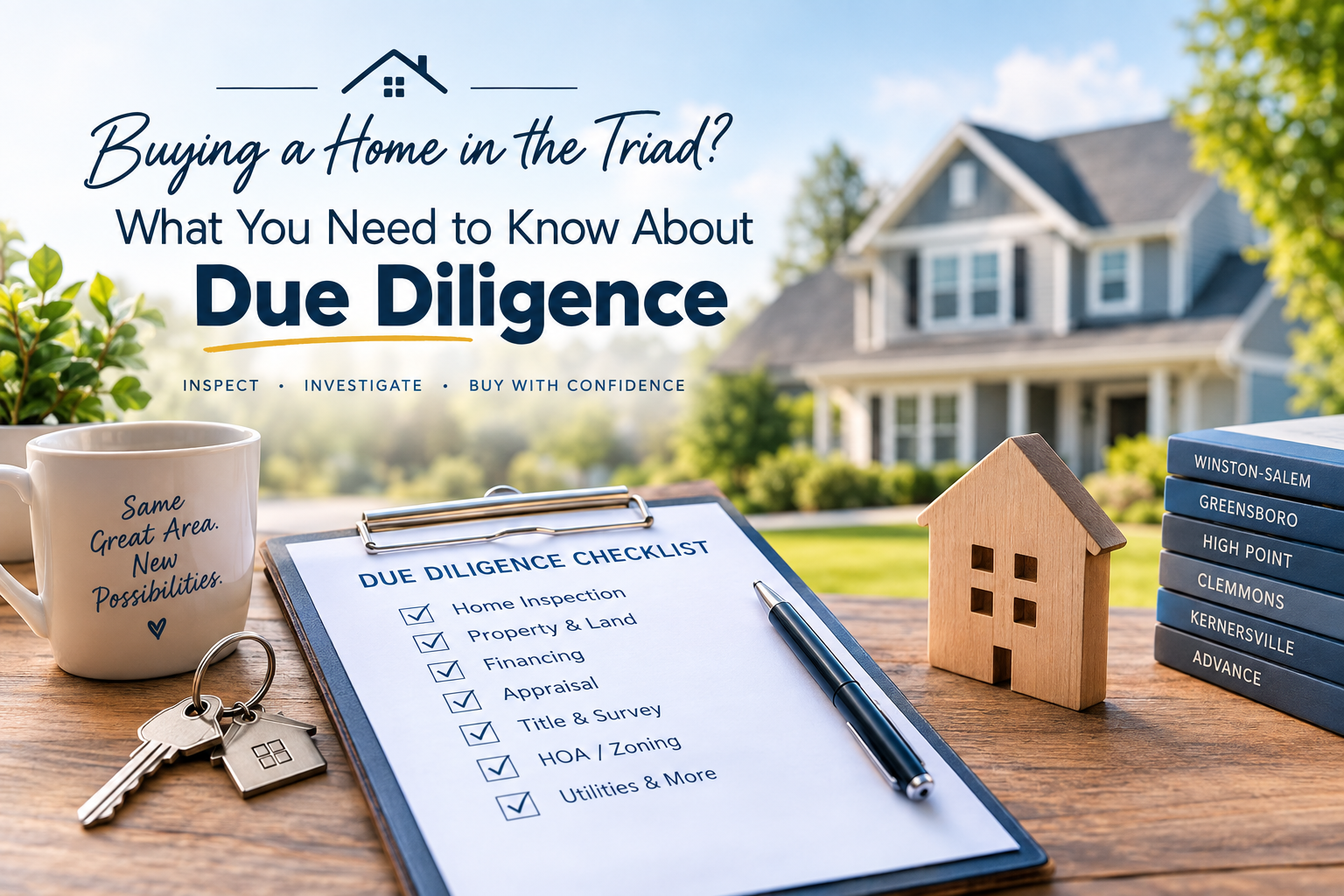
Buying a home in the Triad is exciting, but making an offer is only the beginning. Once your offer is accepted, there is an important period when you get the opportunity to investigate the property and make sure it is truly the right home for you.
In North Carolina, this is known as the Due Diligence Period.
Understanding how due diligence works can help Triad home buyers make more informed decisions and avoid costly surprises.
What Is the Due Diligence Period?
The Due Diligence Period is a negotiated period of time in the purchase contract that allows the buyer to investigate the property and the transaction before deciding whether to move forward.
According to the North Carolina Real Estate Commission, buyers may use this time to investigate matters such as inspections, surveys, appraisals, financing, title, zoning, and other concerns related to the property.
Think of it as your opportunity to look beyond the beautiful kitchen, fresh paint, and great curb appeal.
A home can look perfect during a showing and still have issues that aren't immediately visible.
What Should Triad Buyers Investigate?
Every property is different, but your due diligence checklist may include several important items.
1. Schedule a Home Inspection
A professional home inspection can help identify potential problems with the home's major systems and structure.
Depending on the property, buyers may also consider additional inspections for things such as:
- HVAC systems
- Plumbing
- Electrical systems
- Roofing
- Structural concerns
- Mold
- Termites or other wood-destroying insects
- Septic systems
- Well water
- Chimneys
The North Carolina Real Estate Commission recommends that buyers consider inspections and, when necessary, additional specialized inspections.
An inspection isn't designed to guarantee that a house is perfect. Instead, it gives you more information about the property's condition so you can make an informed decision.
2. Look Beyond the House Itself
The property isn't just the building.
For Triad buyers, it's also important to consider the land, neighborhood, and surrounding area.
Depending on the property, you may want to investigate:
- Property boundaries and surveys
- Easements
- Flood hazards
- Zoning
- Restrictive covenants
- Planned development nearby
- Road access
- Utilities
- HOA rules and fees
- Future plans that could affect the area
This can be particularly important when purchasing a property with a larger lot, acreage, multiple parcels, or rural features.
3. Don't Forget About Financing
Getting pre-approved before shopping is an important first step, but financing doesn't necessarily end once your offer is accepted.
During due diligence, buyers should continue working with their lender to make sure financing is progressing as expected.
This can include completing lender requirements and allowing enough time for the appraisal and loan process.
North Carolina's standard purchase contract places significant importance on the Due Diligence Period, so buyers should work closely with their lender and real estate professional to make sure the timeline is realistic.
What About the Due Diligence Fee?
The Due Diligence Fee is a negotiated amount that the buyer may pay directly to the seller in exchange for the right to conduct due diligence during the agreed-upon period.
One important point for buyers: the Due Diligence Fee is generally non-refundable, although there are specific exceptions under the contract. If the transaction successfully closes, the fee is generally credited to the buyer at closing.
That's why buyers should understand exactly what they are agreeing to before making an offer.
The amount of the fee and the length of the Due Diligence Period can vary depending on the circumstances of the transaction and negotiations between the buyer and seller.
What Happens If the Inspection Finds Problems?
Finding problems doesn't automatically mean you have to walk away from the home.
Depending on the situation, you may be able to:
- Ask the seller to make certain repairs
- Negotiate a credit or other terms
- Accept the property in its current condition
- Request additional inspections
- Decide that the property is no longer right for you
It's important to understand that a seller is not automatically required to make every repair requested by a buyer. Repairs and other concessions are generally matters for negotiation.
The goal isn't necessarily to find a "perfect" house. The goal is to understand what you're buying and decide whether the property makes sense for you.
Don't Wait Until the Last Minute
One of the biggest mistakes a buyer can make is treating due diligence as something that can be handled at the end.
Inspections, surveys, appraisals, lender requirements, repair negotiations, and other investigations can take time.
The North Carolina Real Estate Commission advises buyers to allow enough time for their inquiries and to address potential issues before the Due Diligence Period expires.
If you discover that you need more time, an extension may be negotiated with the seller—but it should not be assumed that an extension will automatically be granted.
What Happens When Due Diligence Ends?
This is one of the most important deadlines in the North Carolina home-buying process.
Before the Due Diligence Period expires, the buyer generally needs to decide whether to proceed with the purchase or terminate the contract according to its terms.
If a buyer waits until after the deadline to address an issue, their options and financial risks can be very different.
That's why keeping track of the deadline is so important.
A Smart Approach for Triad Home Buyers
Whether you're looking in Winston-Salem, Greensboro, High Point, Clemmons, Kernersville, Advance, or surrounding Triad communities, the same basic principle applies:
Don't just fall in love with the house. Take the time to understand the property.
A good due diligence process can help you learn more about the home's condition, the property itself, your financing, and the surrounding area before you commit to moving forward.
Buying a home is one of the largest financial decisions many people will make. Taking the time to investigate the property can give you greater confidence in your decision.
Ready to Start Your Triad Home Search?
If you're considering buying a home in the Triad, having an experienced real estate professional by your side can help you understand the process, stay aware of important deadlines, and ask the right questions along the way.
The right home isn't just one you love—it’s one you understand.