Published May 27, 2026
Why Multigenerational Living Is Shaping the 2026 Housing Market

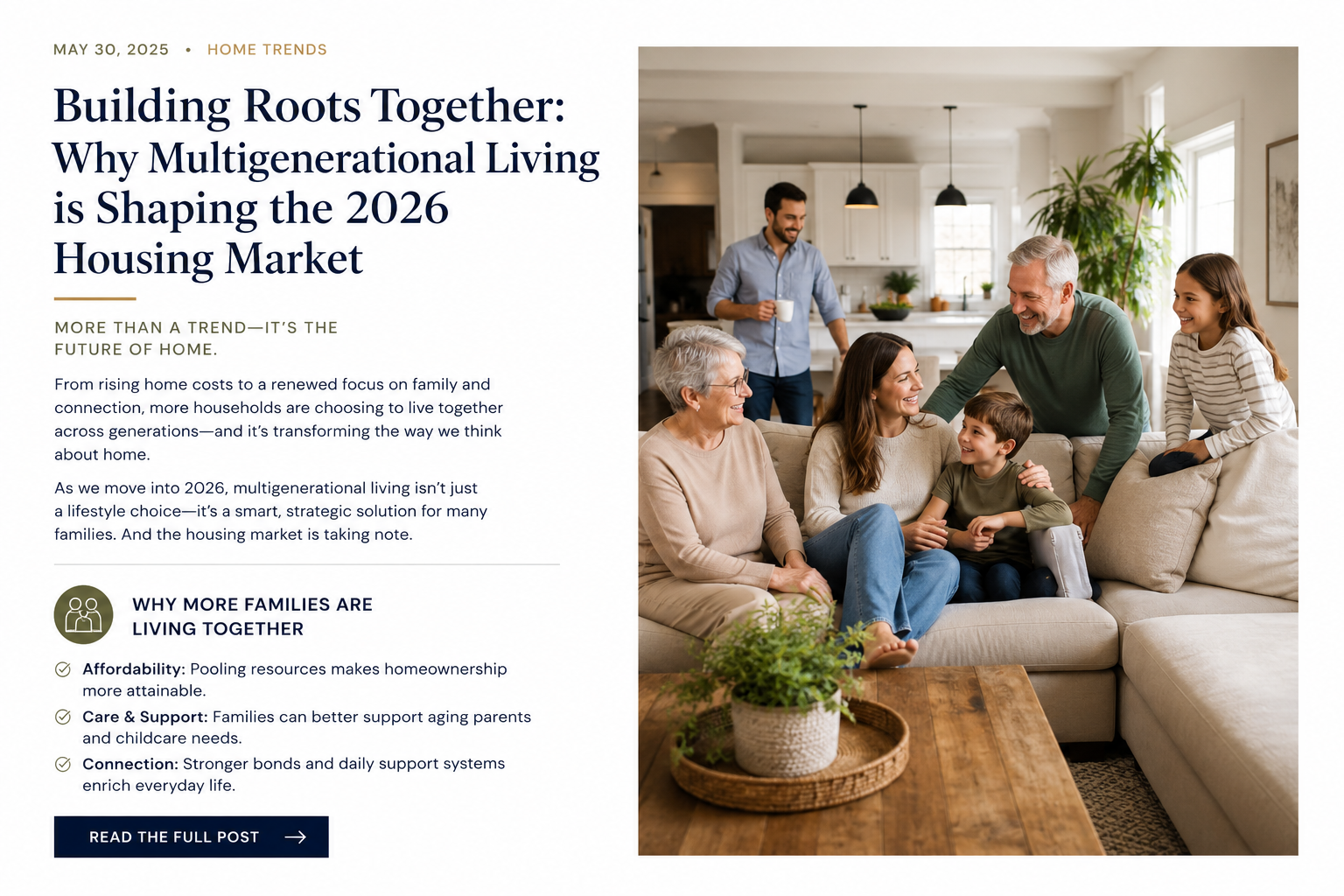
In 2026, more families are rethinking what “home” really means. Across the country, multigenerational living is becoming one of the biggest trends influencing the housing market. From adult children moving back home to aging parents living with family, buyers are searching for homes that offer flexibility, privacy, and enough space for everyone to live comfortably together.
For many households, this shift isn’t just about convenience — it’s about creating stronger financial stability, sharing responsibilities, and building a lifestyle that supports multiple generations under one roof.
Why More Families Are Choosing Multigenerational Homes
Rising home prices, higher living expenses, and changing family dynamics are all contributing to this growing trend. Families are discovering that combining resources can make homeownership more achievable while also providing emotional and practical support.
Some of the most common reasons families are choosing multigenerational living include:
- Helping aging parents stay close to loved ones
- Allowing adult children to save money before purchasing their own home
- Sharing monthly household expenses
- Providing built-in childcare support
- Creating long-term financial flexibility
- Building stronger family connections
As a result, buyers are prioritizing homes that can comfortably accommodate different lifestyles and age groups.
Features Buyers Are Looking For
Today’s buyers are searching for homes that provide both togetherness and privacy. Builders and sellers are seeing increased demand for features that make multigenerational living more functional.
Popular features include:
Separate Living Areas
Finished basements, bonus rooms, guest suites, and converted garages are becoming highly desirable because they offer extra independence while keeping family members nearby.
Dual Primary Suites
Homes with two primary bedrooms are attracting attention from families who want privacy for both parents and grandparents.
Flexible Floor Plans
Open layouts with adaptable spaces allow families to create home offices, playrooms, workout spaces, or private lounges depending on their needs.
First-Floor Bedrooms
Single-level living or first-floor suites are especially important for aging family members who may prefer to avoid stairs.
Larger Kitchens and Gathering Spaces
Since multigenerational households often spend more time together at home, spacious kitchens and comfortable common areas are becoming major selling points.
The Financial Benefits of Shared Living
One of the biggest advantages of multigenerational living is the ability to share expenses. Mortgage payments, utilities, groceries, maintenance costs, and even childcare expenses can become more manageable when multiple adults contribute.
For some families, pooling resources also opens the door to purchasing a larger or better-located home than they could afford individually.
In today’s market, many buyers see multigenerational living as a smart long-term financial strategy rather than a temporary solution.
What Sellers Should Know
Sellers who have homes with flexible layouts may have an advantage in today’s market. Features like extra bedrooms, private entrances, bonus spaces, or finished lower levels can make a property especially appealing to modern buyers.
When preparing a home for sale, highlighting versatility is key. Buyers want to envision how a home can adapt to changing family needs over time.
Simple staging updates can also help showcase multigenerational potential:
- Create a guest suite or secondary living space
- Emphasize home office flexibility
- Highlight outdoor gathering areas
- Showcase storage and organization features
- Make private spaces feel comfortable and functional
Looking Ahead
As housing needs continue to evolve, multigenerational living is expected to remain a major influence on the real estate market. Buyers are no longer focused solely on square footage — they are looking for homes that support flexibility, connection, and long-term value.
Whether families are planning for aging parents, supporting adult children, or simply looking for a smarter financial path, homes designed for multiple generations are becoming more important than ever.
If you’re thinking about buying or selling in today’s market, understanding these changing buyer preferences can help you make informed decisions and uncover new opportunities.